New to stacking?
Stacking means combining savings layers on the same purchase so you can see your real final cost before you buy.
Use the Calculator
Enter the store and cart total, then add the savings you already know about. Cashbacking shows the real effective cost after rewards and rebates.
- ✓Enter the checkout price
- ✓Pick the store and card
- ✓Add sales prices, coupons, tax, shipping, portals, and card rebates, leveraging our calculator integrated rebate and portal data
- ✓See if other cards can significantly increase your savings on your purchase
- ✓Save one stores stack, then build another. Compare as many combinations as you want to find the best final price
Card Rewards & Credits
Your card can add normal rewards plus extra statement credits. Some banks show targeted offers like spend $100, get $20 back.
- ✓Card rewards can be cash back, points, or miles
- ✓Card credits may come from Amex, Chase, Citi, Wells Fargo, and others
- ✓Some card offers must be activated before purchase
- ✓Not every user sees the same card credits
- ✓✨ A premium account helps you search hundreds of seeded card rebates and credits before you shop
Portal Cashback
This is where Hall of Fame stacks begin. Portals can add major cashback on top of sales, coupons, card credits, and card rewards.
- ✓Global offers may be visible to many users
- ✓Targeted offers may appear by email or account
- ✓One user may see 0.5% while another sees 10%
- ✓Rates can change quickly, so always verify before buying
- ✓Leaving a cart or waiting before checkout can sometimes trigger a higher portal offer - experiment and see
Why rates may not match what another person sees
Portal cashback and card credits can be public, targeted, expired, account-specific, or sent only by email. Cashbacking uses reported and observed savings data to help you know what may be possible, but you should always confirm the offer in your own portal or card account before buying.
Stacking rules to be aware of
Stacking can create major savings, but some stores, portals, and card offers have restrictions. Understanding the common rules below can help you avoid losing cashback or rewards during checkout.
Some portals reject cashback if you use outside coupon codes. Coupons provided directly by the portal are usually safer.
Most purchases only track through one portal click. Compare rates carefully before checkout.
Save screenshots, emails, and confirmation pages in case cashback fails to track or is denied later.
Some stores exclude gift cards, taxes, shipping, specific brands, or clearance items from cashback.
Rates may change daily and targeted offers may differ between users, memberships, browsers, or devices.
Some issuer rebates and statement credits must be activated before making the purchase.
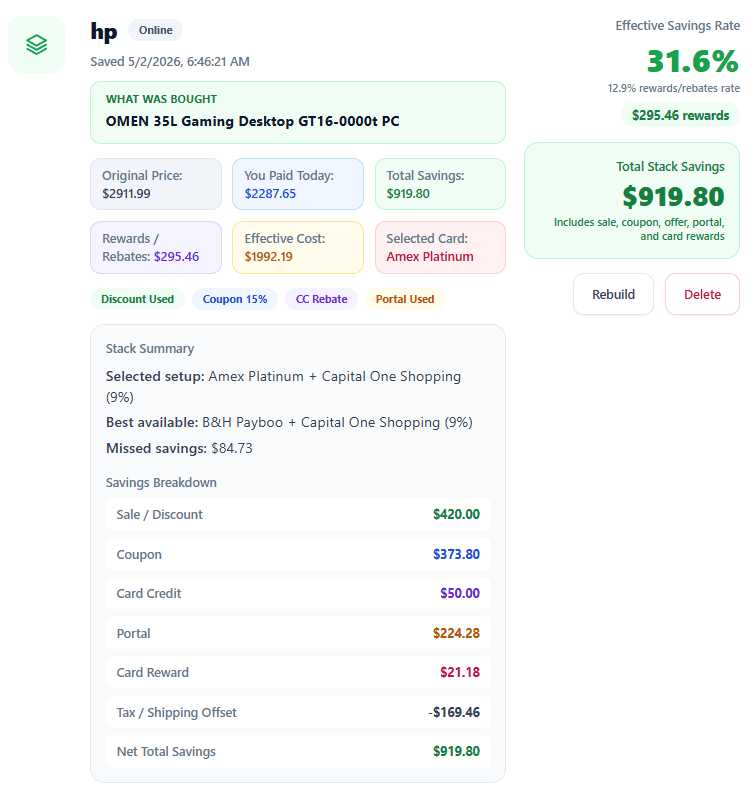
So why do this? Heres a great example of a layered stack.
This OMEN purchase combined a sale price, coupon, card offer, cashback portal, and card rewards into one stack.